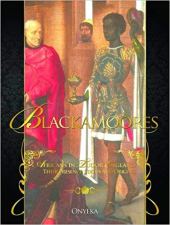
 In this writing, Onyeka sets out to prove the existence of black people during the Tudor era. What makes his arguments so strong is that he brings forth contemporary documents, paintings, statues, and literature to support his belief. The name ‘Blackamoor’ was one of the several names that Tudor writers used to describe people of African descent. Perhaps the phrase Magnum Opus is overused within academic circles, Gibbons the Fall of Rome, Gerald Massey’s ‘Ancient Egypt Light of The World’ and more recently Robin Walker’s, ‘When We Ruled.’ Blackamoors is a book which deserves to be mentioned in the same breath as the preceding titles.
Each piece of evidence is inconclusive, but just like the disparate pieces of the puzzle, when put together they paint a clearer picture of the political status and lives of Africans. The first letter written by Elizabeth I on 11th July 1596 confirms that there are three categories of Africans; those who had arrived ‘late,’ those who are ‘already here to manie’ and the ten Blackamoores that came with Sir Thomas Baskerville. Onyeka connects the dots, by looking more closely at the interaction between Africans and traders in 1596. Famous traders Francis Drake and John Hawkins who tried to take control of a Puerto Ricans trading port. In the letter the Elizabeth grants Edward Banes authority over these Africans.
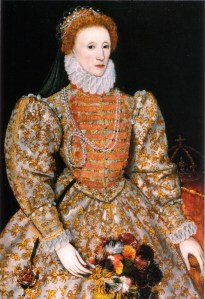
Through his deconstruction of the language, Onyeka shows that these black people were not slaves, as slaves are legally the property of their owners. Therefore cannot be ‘idle or masterless’ and can be ‘compelled to work.’ The second piece of evidence, the Proclamation of 1601 is a lot more comprehensible. Although its author is unknown, the writer clearly expresses their unhappiness at the ‘great number of negroes that have been carried into this realm since the troubles between her highness and the King of Spain.” Onyeka believes that Sherley wrote the elder this letter. It is a follow up to series of letters prior in which he was trying to get hold of some Africans. More interestingly, the letter makes a clear distinction between ‘Negroes and Blackamoors.’
He then references countless cases of Africans refusing to accept the status of slaves. Maria Moriana, an African woman living in living in England whose employer had attempted to sell her, but was unable to once those around her refused. From thorough analysis of both letters, the fact that the Africans could not be removed from Britain so easily, implies that they would have to be more than just slaves. After proving their status, he presents documented evidence to prove that Africans played an important role in Tudor Britain. Onyeka’s unscrupulous methods of investigation are reflected in the thick listing of footnotes contained at the end of each chapter.
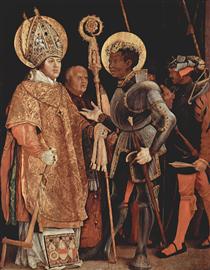
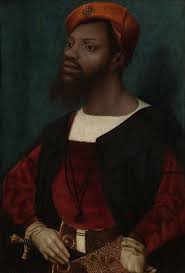
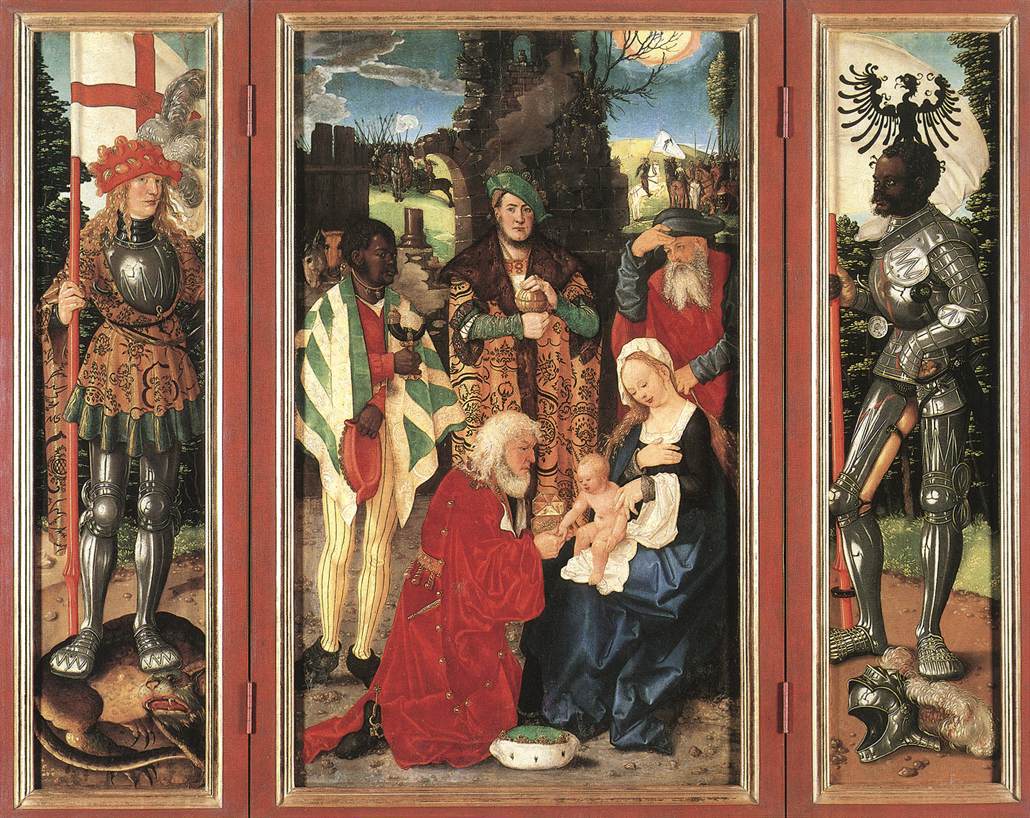
In addition the book contains twenty-eight high-quality reproductions of African people in medieval Europe. Including Jan Moseart’s portrait of an African man 1520-1530 Holland. A striking image due to its human likeness. The painting is of a presumable member of Dutch nobility, whose red gown is fastened by a golden encrusted belt and sword. As well as John Blanke’s Westminster Tournament Roll of 1511, which depicts an African on horseback,blowing from a trumpet from which hangs the royal feathers. These pieces of evidence lead to the most glaring statement of this piece of work, is that not only was there a medieval presence of Africans in Britain. This presence spread throughout the continent, particularly in Spanish and Portuguese nobility.
Perhaps most fascinating topic covered in the book is Onyekas taking apart of the Westminster Roll, the painting that commemorates the marriage of Katherine of Aragon to Henry VIII. This painting depicts a trumpet player by the name of John Blanke whose turban reveals his Moorish ancestry. At this part of the book the historian displays his brilliant investigatory and deciphering skills. The artists placing of him on a white horse was done deliberately to accentuate his dark skin, as was his surname. (Blanc means white in French) The image refutes the beliefs of (name the historians) that black people in medieval Europe were strictly slaves. Throughout the book, he proves that within Tudor England and medieval Europe there were no laws that could condemn a man to slavery on the basis of his skin colour. He expounds on the account (writers mane) of Katherine of Aragon who arrived in England with an entourage of ‘Ethiopians.’ In this same chapter the writer explains how after the fall of Granada, the last Moorish Kingdom. Many Moors escaped to live in England with Sephardic Jews.
By the mid sixteenth-century there existed many Iberian needle-makers in England. Many writers at the time claim that African introduced the art of making ‘Spanish Needles’ into England from. This is significant, as he had most probably brought these skills from Spain with him. Furthermore, the Worshipful Company of Needle-makers used an African man as their symbol. Elizabeth I gave a diadem to Sir Francis Drake, which contained an image of an African man. Coincidentally, in Drake’s writings are references to ‘Negro with a cut on his face.’ Diego acted as Drake’s chief conductor interpreter, he was a Symeron, a group of people who had separated from their slave masters and created their own kingdoms. Drake worked with Diego for four years, and accredited him with finding him new routes to the North and South-Atlantic.

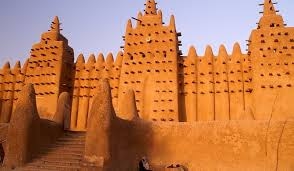
To the novice of black history, the popping up of Africans with Spanish names may seem like somewhat an oddity. When looking at centuries old documents we have to remove the lenses of European hegemony, which frame our worldview. In the mid-sixteenth century The Songhai Kingdom was the dominant empire of West Africa. Along with the empire of Mali, they were both mythologized for their endless riches of gold. Out of fear of the power of these empires, the English explorers duplicated the Spanish tactic of working with men from smaller kingdoms as a way of gaining favour so they could trade. Therefore, the prevalence of ‘these kindles of people.’ Could be considered mildly analogous to England’s courting of rich middle Easterners and Russians who own vast wealth in West London. What the writer is really alluding to is the impact of the Moorish Africans on the rest of Europe.
Onyeka does well to allow the evidence to dictate the discourse of the narrative, rather than impose our own modern political outlook on black people in medieval England. Every new discovery opens up more questions about the lives of these people.
In conclusion, Blackamoors is a book which encourages one to think beyond the confines of established history. It urges us to question our own convictions about the world around us, where were really from and who we really are.

 Moutimbasblogs