Hello, and welcome to Moutimbasblogs, this page is dedicated to the study, research and celebration of black History. From the British Isles across to the African continent, I will be excavating scripts, paintings and artefacts from around the world. Bringing to light unknown stories of men and women who have been written out of history. Figures such as John Blanke, the sixteenth century trumpeter who played in Henry VIII’s court. The Moroccan seamstress Mary Fillis, to the Ivory Bangle Lady.
On this journey, I will be seeking to answer some of our most perplexing questions. Were there black people in Britain before the Windrush? Who put and end to the slave trade and why? What was Africa like before colonization? As well as many more. History is a shattered mirror, each fragmented piece reflecting a part of ourselves. In the form of tombstones, statues and obelisks it engulfs us and forms our collectives consciousness. For those that dare to pursue, it becomes a torch awakening the spirit and enlightening the world around them.
At current, the national curriculum does not recognise the contribution of black people in any of the educational fields. Thus, black children are participating in an education system that overlooks the achievements of their ancestors. This can have a debilitating effect on ones identity as well as ones relationship with the world around them. Resulting in; negative self image, inferiority complex and low self-esteem. Whereas, the study of history encourages self-pride, open mindedness, and the respect of differences. Looking back at the lives of those that lived before our time should inspire us to replicate their great feats. Or at the very least, forewarn us of duplicating their errors. So please, join me on this wondrous voyage.
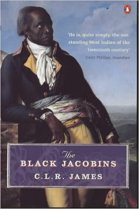
The Black Jacobins is quite a difficult book to read, the bibliography reveals it is based purely on contemporary sources. Letters between state officials in France and San Domingo. While this authenticates the veracity of his writing, it can result in a very challenging read. Every so often one finds themselves snapped out of the book to google the eighteenth century French vocabulary, ‘maréchaussée’, ‘sans-culottes’ etc. While trying to keep up with the story telling prose in which the text is written. Fortunately, this does not take away from what can only be described as the ultimate text on a much overlooked event in history, The Haitian revolution.
What James is able to do so well is rid us of this romantic double sided view history; royalty and masses, owners and slaves. Within the accumulation of events that led to Haitian Revolution were to be many players. The absentee lords in France, the Parisienne Friends of the Negro and radical Jacobins of Parliament. The poor whites, the property owners, the Spanish, the British, the ‘mulattoes’ and of course the blacks. How all of these different forces vying for their own power, ended up in the creation of the first independent Black state is a question that James answers with poignancy.
In ‘Parliament and Property’ he sets the scene for what is to come, documenting the clashes between the poor whites and the highly educated overseers, the mixed race class. The former mostly comprised of bandits and banished criminals, supported the uprising in Bastille, hoping for it to bring a change to their circumstances. The latter wore the red cockade in flattery of the white planters on the island. Subject to violent attacks and lynchings, the creole class were embittered due to their own political status. As they were still prohibited from owning land and voting in the French national assembly. Those that attempted to attain them were hanged.
This entanglement was only to be made more complicated by the arrival of the British on the island in 1794. The British were attempting to take advantage of the revolutionary fervour that had swept across the island since the rise of the Creoles. With the intention of reinstalling slavery. But history shows us that great men and women are moulded by the size of their adversity.
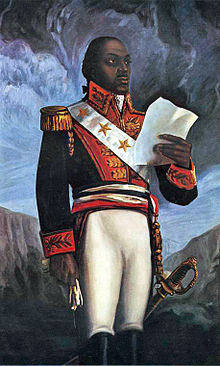
Which brings us to the hero of the story, Toussant L’Ouveture. A saint like figure whose intellectual faculties, physical prowess and kindness endeared him to the hearts of all colours of the San Domingo. This was man who in 1793 protected his slave master and her plantation from being set a light by the growing band of revolutionaries. James depicts him as a demigod, driven by emancipation but never succumbing to the racial hatred that had stained the island for over two centuries. A man of exceptional intelligence and remarkable physical ability. He was known to ride his horse for one hundred and twenty five miles a day, and was trained to swim across horrid rivers. He governed his life with extreme discipline and was able to live off two bananas and water for days.
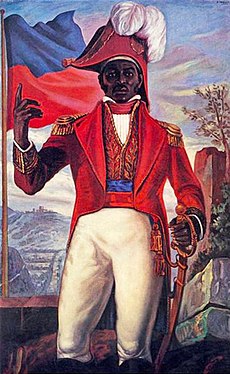
Toussaint L’Ouveture
Toussaint’s unique character was shaped by his earlier life, . As a slave he had an agreeable relationship with his planters family. Not only had he never been whipped but as the steward of livestock he made regular contact with other authorities who oversaw the plantations. His vast reading had given him an overview of global politics and military science. All of this was to lay the basis for his political savvy-ness, his letter writing ability. Such as his scheme to allow his white comrade Laveuax to be arrested and taken to France so that he could be elected as representative in the House of 1796.
As the new French constitution had granted seven seats to San Domingo. Toussaint was a calculated political thinker, a combination of unbelievable fore-planning and the shrewdest patience. In 1797 he waited for the most convenient moment before going to the white stronghold hold of Le Cap. Where he gave the French Commissioner and agent Sothonax the ultimatum of being murdered or fleeing to Paris. The reasoning behind which is explained in a long letter to the directory. In which he describes that after his ceremony as French Commander-in-Chief, Sothonox attempted persuasion of Toussaint to murder of all the whites of the island.
Leger-Felicite Sonthonax 1716-1813
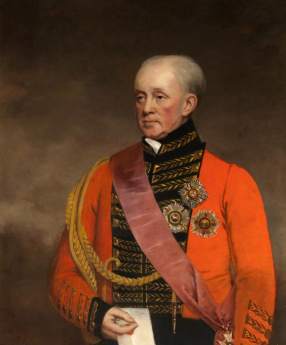
Another example of his military genius was his threatening of the British Lieutenant Thomas Maitland, by warning that if British troops did not rescind from Mole St Nicholas in the North and Jérémie in the South. He would send Africans from San Domingo to Jamaica to start an uprising. Afraid of rebellion, Maitland left San Domingo in 1798. Amongst his most formidable achievements were his division of the island into six sections that still remains. Coinciding with his desire to remain amiable to all parties, he created a court system by which there were to be courts in both the French and Spanish parts of the capital.
Sir Thomas Maitland 1760-1824 British Lieutenant General
Haitian defeat of the British in 1796.
Furthermore, aware of the Spanish hatred of him and his army, Toussaint extended a hand of peace to Western part of the island. He established a court of appeal to hear their grievances. Repaired many of their roads, and built a two hundred mile long super road from Laxavon to San Domingo encouraging them to cultivate sugar the East. As a way of monitoring the corruption of the merchants he imposed a twenty percent tax on their imports. Agriculture in San Domingo began to flourish ushering in a golden age for the island. He changed the culture within the army by giving favour to officials who were married, and discouraging concubinage. He reconstructed buildings in Le Cap, creating the famous Hotel de la République which became the social epicentre for men of all colours. With his promotion of creole and blacks into positions of power all over the island, racial prejudice and feelings of inferiority began to dissipate.
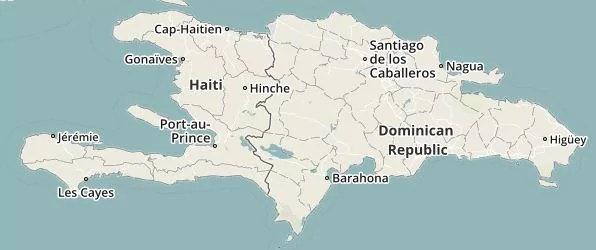
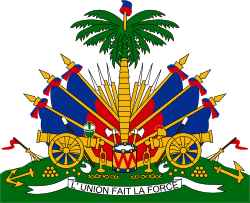
Haiti and The Domincan Republic
Where did it all go wrong for Toussaint?
Toussaints grave error was that in his reverence for France he began to isolate the black masses. The latter whose lack of education has left them too ignorant to manage an island the size of San Domingo. Toussaint believed that in order for the island to prosper, he would have to maintain cordial relations with the property owners. It was they who had the knowledge of accounting, finance, duties and so forth. Moreover, he feared reprisals from France and did not want to alienate Paris. He believed that France with its philosophers, Catholicism and its language was the pinnacle of human civilisation. That San Domingo should be an extension of the mother country. In the drafting of the constitution in 1801 no blacks were present. In the document he declares San Domingo independent, but requests French support financially and in local government. Toussaint had already sealed his own fate with his assurances to the property class that they were to remain the owners of their plantations.
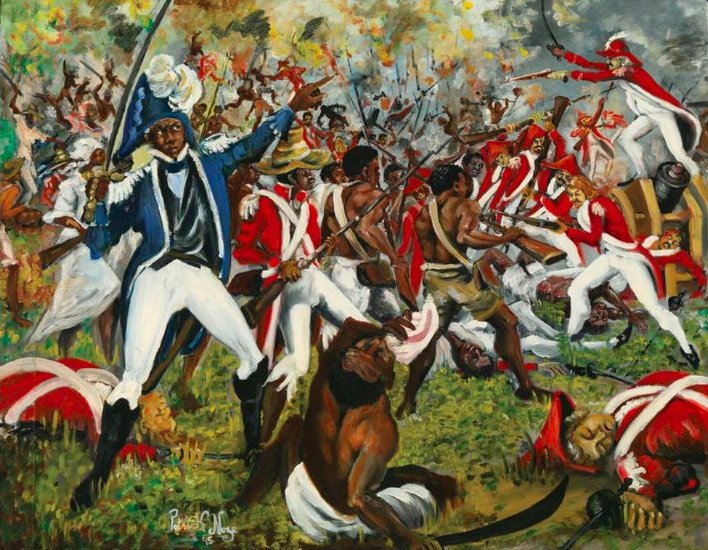
Painting from the Haitian Uprising
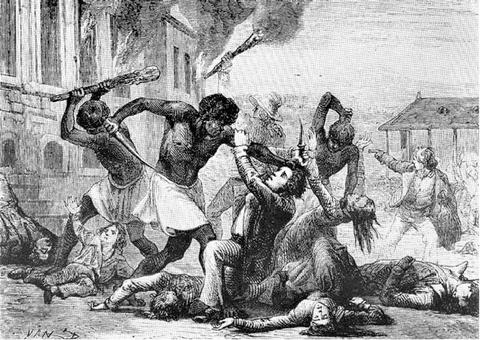
Unhappy with the new deal by which they would have to work for the same white property owners. The Northern region revolted while Toussaint was away at the wedding of Dessalines. They started an uprising in Plaisance and Limbe, killing all whites they were to come across. This revolt was led by Moise, a young revolutionary black who in line with the masses believed labouring for ones previous owners was no replacement of the slave system. Additionally, he sought an alliance between blacks and creoles and didn’t believe in pandering to the whites one bit. Moise had become the face of real revolution and had taken the place of Toussaint, who at this point was out of touch. Further solidifying his non-synchronicity with the blacks was his decision to execute Moise.
Jean-Jacques Dessalines 1758-1806
In Toussaint L’Ouveture we see the the modern day dilemma of many African leaders, torn between the idealism of their own nations and the pressure to maintain relations with ‘The West’. Would the story have ended differently if he had took a harder line and expulsed or slaughtered all whites. To borrow James expression, he was blinded by “enlightenment.” Or perhaps was his fate sealed with the murder of the people’s hero Moise, the final act that pushed them over the edge? I believe that Toussaint knew that the only way the blacks could be left emancipated was to guarantee to the French assembly that San Domingo would continue to be their source of wealth. It was for this reason that I think he was soft on the property owners. Toussaint would have known of France’s military capability and any threat to the property class would have brought forth the wrath of France a lot more quickly.
Whatever the case, what ensued was to be one of the gruesome battles in history, in which the Africans of Haiti fought to the death for the liberty of their country. The Haitians favoured guérilla warfare over direct combat, cutting French supply lines, munitions and communication. Appearing in French encampments in the middle of the night only to start a blaze then disappear into the forest. Yellow fever and the rainy season played their part in the decimation of an already dispirited French army. Of the 24,000 French army that had arrived in 1801, only a third remained.
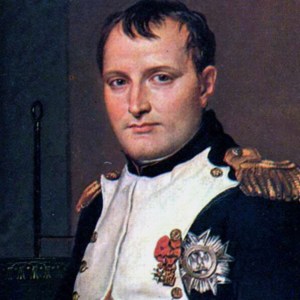
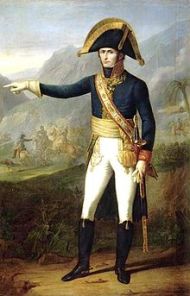
Napoleon Bonaparte 1769-1821 Military Leader and First Emperor of France.Charles Leclerc Army General 1772-1802
History confers the convenience of hindsight. In which we can see that Toussaint’s gravest error was his conviction that Haiti could not survive without France. He sent a letter to Napoleon and the French general on the island Leclerc reassuring his loyalty to the mother country. Toussaint was arrested at a meeting in the headquarters of general Brunet. Deceived by the tone of the invitation that guaranteed his safety, he was seized upon and sent to exile in Paris. Alone in his fetid cell and suffering from the ailments of old age. Toussaint died on April the 7th 1803. Regardless of his flaws, Toussaint L’Ouveture remains one of the most remarkable figures of history. The leader of a revolution that was to catapult the end of the slave trade. The creator of the first independent Black state.
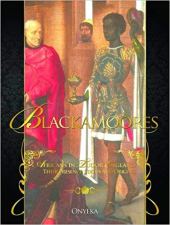
In this writing, Onyeka sets out to prove the existence of black people during the Tudor era. What makes his arguments so strong is that he brings forth contemporary documents, paintings, statues, and literature to support his belief. The name ‘Blackamoor’ was one of the several names that Tudor writers used to describe people of African descent. Perhaps the phrase Magnum Opus is overused within academic circles, Gibbons the Fall of Rome, Gerald Massey’s ‘Ancient Egypt Light of The World’ and more recently Robin Walker’s, ‘When We Ruled.’ Blackamoors is a book which deserves to be mentioned in the same breath as the preceding titles.
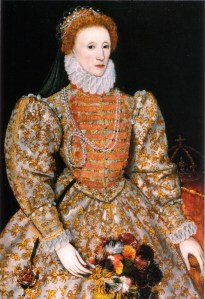
Each piece of evidence is inconclusive, but just like the disparate pieces of the puzzle, when put together they paint a clearer picture of the political status and lives of Africans. The first letter written by Elizabeth I on 11th July 1596 confirms that there are three categories of Africans; those who had arrived ‘late,’ those who are ‘already here to manie’ and the ten Blackamoores that came with Sir Thomas Baskerville. Onyeka connects the dots, by looking more closely at the interaction between Africans and traders in 1596. Famous traders Francis Drake and John Hawkins who tried to take control of a Puerto Ricans trading port. In the letter the Elizabeth grants Edward Banes authority over these Africans.
Elizabeth I
Through his deconstruction of the language, Onyeka shows that these black people were not slaves, as slaves are legally the property of their owners. Therefore cannot be ‘idle or masterless’ and can be ‘compelled to work.’ The second piece of evidence, the Proclamation of 1601 is a lot more comprehensible. Although its author is unknown, the writer clearly expresses their unhappiness at the ‘great number of negroes that have been carried into this realm since the troubles between her highness and the King of Spain.” Onyeka believes that Sherley wrote the elder this letter. It is a follow up to series of letters prior in which he was trying to get hold of some Africans. More interestingly, the letter makes a clear distinction between ‘Negroes and Blackamoors.’
He then references countless cases of Africans refusing to accept the status of slaves. Maria Moriana, an African woman living in living in England whose employer had attempted to sell her, but was unable to once those around her refused. From thorough analysis of both letters, the fact that the Africans could not be removed from Britain so easily, implies that they would have to be more than just slaves. After proving their status, he presents documented evidence to prove that Africans played an important role in Tudor Britain. Onyeka’s unscrupulous methods of investigation are reflected in the thick listing of footnotes contained at the end of each chapter.
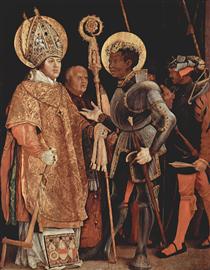
Formulae and St Maurice 1517-1523 Getmany. Matthias Gruenwald.
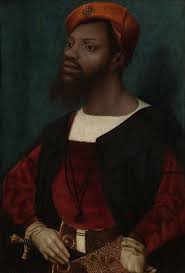
In addition the book contains twenty-eight high-quality reproductions of African people in medieval Europe. Including Jan Moseart’s portrait of an African man 1520-1530 Holland. A striking image due to its human likeness. The painting is of a presumable member of Dutch nobility, whose red gown is fastened by a golden encrusted belt and sword. As well as John Blanke’s Westminster Tournament Roll of 1511, which depicts an African on horseback,blowing from a trumpet from which hangs the royal feathers. These pieces of evidence lead to the most glaring statement of this piece of work, is that not only was there a medieval presence of Africans in Britain. This presence spread throughout the continent, particularly in Spanish and Portuguese nobility.
Portrait of an African Man 1520 to 1530, Rijksmuseum, Holland
Perhaps most fascinating topic covered in the book is Onyekas taking apart of the Westminster Roll, the painting that commemorates the marriage of Katherine of Aragon to Henry VIII. This painting depicts a trumpet player by the name of John Blanke whose turban reveals his Moorish ancestry. At this part of the book the historian displays his brilliant investigatory and deciphering skills. The artists placing of him on a white horse was done deliberately to accentuate his dark skin, as was his surname. (Blanc means white in French) The image refutes the beliefs of (name the historians) that black people in medieval Europe were strictly slaves. Throughout the book, he proves that within Tudor England and medieval Europe there were no laws that could condemn a man to slavery on the basis of his skin colour. He expounds on the account (writers mane) of Katherine of Aragon who arrived in England with an entourage of ‘Ethiopians.’ In this same chapter the writer explains how after the fall of Granada, the last Moorish Kingdom. Many Moors escaped to live in England with Sephardic Jews.
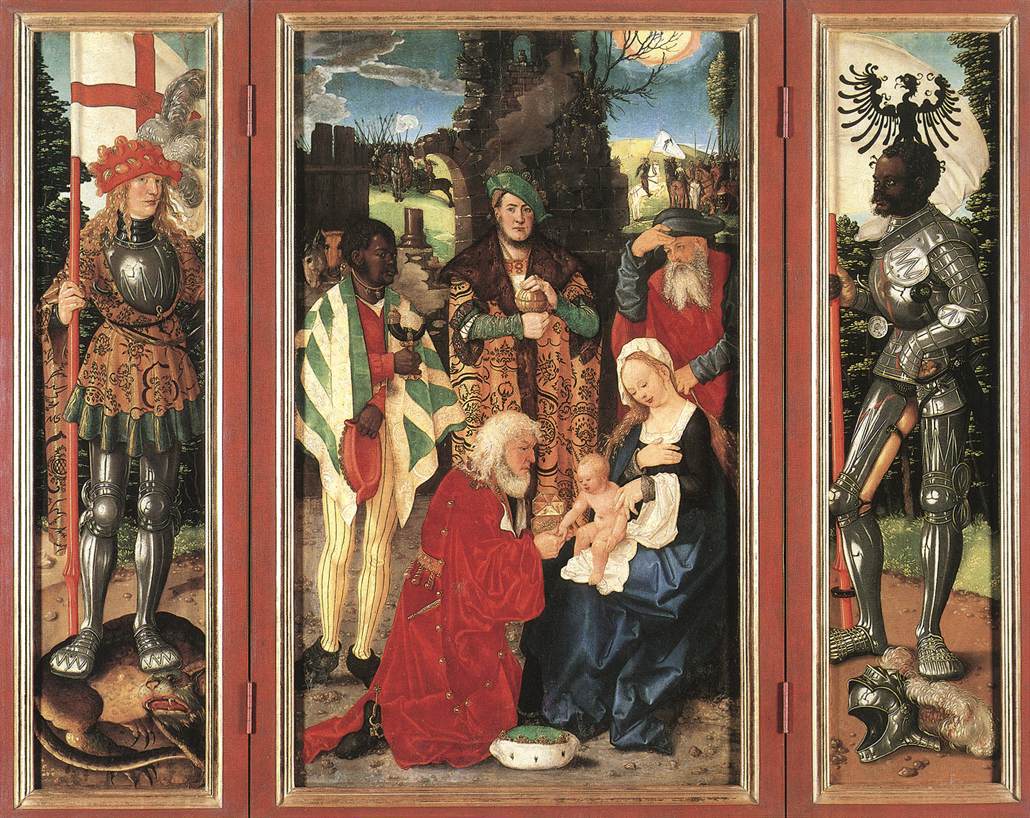
Hans Buldung Grien, The Adoration of the Magi, 1507 from the Staliche Museum, Berlin Germany.
By the mid sixteenth-century there existed many Iberian needle-makers in England. Many writers at the time claim that African introduced the art of making ‘Spanish Needles’ into England from. This is significant, as he had most probably brought these skills from Spain with him. Furthermore, the Worshipful Company of Needle-makers used an African man as their symbol. Elizabeth I gave a diadem to Sir Francis Drake, which contained an image of an African man. Coincidentally, in Drake’s writings are references to ‘Negro with a cut on his face.’ Diego acted as Drake’s chief conductor interpreter, he was a Symeron, a group of people who had separated from their slave masters and created their own kingdoms. Drake worked with Diego for four years, and accredited him with finding him new routes to the North and South-Atlantic.
The Drake Jewel
To the novice of black history, the popping up of Africans with Spanish names may seem like somewhat an oddity. When looking at centuries old documents we have to remove the lenses of European hegemony, which frame our worldview. In the mid-sixteenth century The Songhai Kingdom was the dominant empire of West Africa. Along with the empire of Mali, they were both mythologized for their endless riches of gold. Out of fear of the power of these empires, the English explorers duplicated the Spanish tactic of working with men from smaller kingdoms as a way of gaining favour so they could trade. Therefore, the prevalence of ‘these kindles of people.’ Could be considered mildly analogous to England’s courting of rich middle Easterners and Russians who own vast wealth in West London. What the writer is really alluding to is the impact of the Moorish Africans on the rest of Europe.
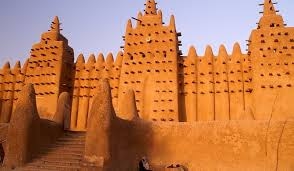
The remains of Jenne a city of Timbuktu
Onyeka does well to allow the evidence to dictate the discourse of the narrative, rather than impose our own modern political outlook on black people in medieval England. Every new discovery opens up more questions about the lives of these people.
In conclusion, Blackamoors is a book which encourages one to think beyond the confines of established history. It urges us to question our own convictions about the world around us, where were really from and who we really are.
In this magnanimous piece of work Ron Ramdin provides an in-depth overview of the creation of the black working class. From the epoch of the slave trade all the way to our modern era. Texts that set out to cover such a wide-span of history can sometimes suffer from an overload or misapplication of content. One of the biggest challenges to the historian remains, not to merely narrate but to bring the past to life. To awaken the imagination of the reader and immerse them in a world beyond their senses, while still presenting reasonable arguments and factual information. Ramdin achieves this, almost effortlessly, his style is poised, confident and steeped in evidence. All of this he does while providing Marxist interpretations of historical events. Individual motivations for power and wealth are absent here. The relation of capital to class frames the narrative.
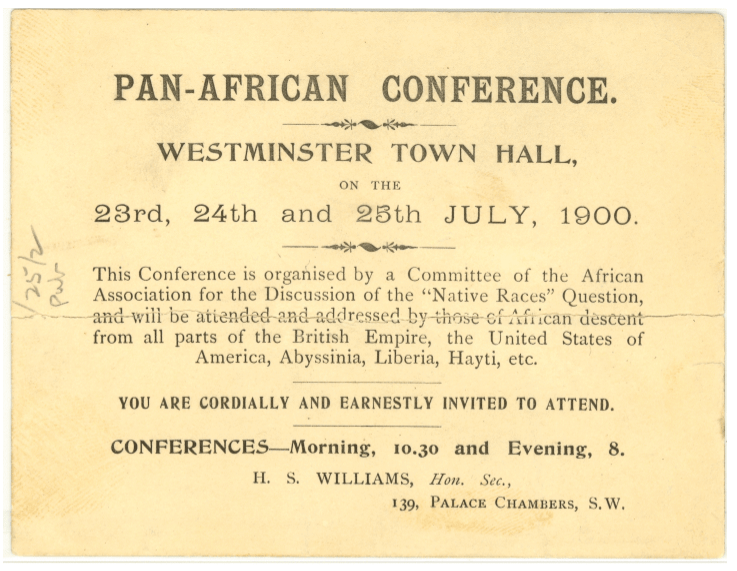
In the third chapter, ‘Post-Emancipation Developments.’ Ramdin sheds light on unknon figures of Pan Africanism; J.A Thorne and Henry Sylvester Williams, the latter, whose plan to settle one hundred West Indian families on the Zambezi laid the foundation for Marcus Garvey’s back to Africa movement. In 1897 his forming of the African Association was to become of crucial importance to the development of Black British activism. The Pan-African conference held by the African Association in 1900, its aim was to speak out against the sprawling British empire and her acquisition of more land on the continent. The address was for European nations to recognize the independence of Ethiopia, Liberia and Haiti. Despite being a gesture of a grand scale that attracted international attention and high profile figures such as W.E.B DuBois. The conference failed in its opening of dialogue with Queen Victoria, as Wiliams’ memorial of concern for the plight of Blacks in South Africa were evaded by Lord Chamberlain.
Ramdin also sheds light on one of the great conundrums of history. The abolishment of the slave trade. The French, and Dutch broke Britain’s eighteenth century monopoly on West Indian sugar. Furthermore, the output of her islands in the Caribbean had declined drastically due to, absentee lordship. . The capture of Guyana and Mauritius was essential she required fresh territories to produce cheaper sugar. The latter increased its production almost three-fold in fifteen years from 55,163 tons in 1850 to 165,000 tons in 1865. The point being, that the replacement of slavery with indentured labour shows that the 1838 abolition was not brought about as a result of some moral epiphany.
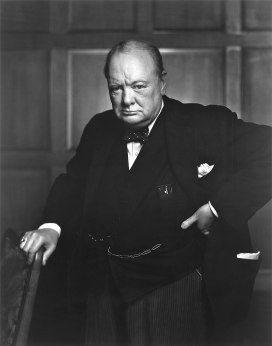
Britain is a ‘parasitic economy,’ whose wealth derives overwhelmingly from its empire. This view was echoed in 1929 by Chancellor of the Exchequer Winston Churchill, who went on to further claim that our social services rely on the Commonwealth. Some of the most startling facts to support these assertions; the rise in import surplus from £30 million in 1895-1899 to £134 million to £438 million in 1947. This rise in import debt coincided with an unravelling of the industrial sector. Coal, shipping, agriculture and cotton out put declined rapidly prior to the first world war. Imported goods can spur the income of the secondary tier of an economy but the render the working class futile. It becomes apparent throughout this chapter that these Isles have always been fore-thinkers in economic strategy. In what Ramdin describes as “the exchange of free-trade for mercantile monopoly.”
Following the abolition of the slave trade, Britain began to facilitate the movement of Indian people around the empire. Which included Ceylon, Natal, as well as many islands of the Caribbean. A total of two million people were dispersed around Britain and France’s territories between 1840 and 1870. In the context of history the commencing of indentured labour corresponds exactly with abolition, this coincidence prompts one to ask why would the British seek to replace one form of servitude with another. I believe the solution to this conundrum lies in the understanding two things; 1) Brtish fore-planning – Advanced economic preparation. By which strategists plan for events decades ahead. One notices further that the end of indentured labour occurs at the same time of British foray’s into the African continent. 2) Divide and conquer – The age-old policy used to control and suppress. Indians in the Caribbean provided a buffer-zone between the whites and the increasingly growing and riotous blacks.
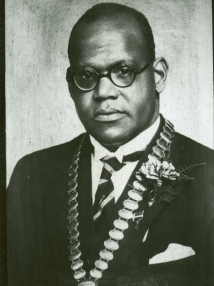
Black British activism in the twentieth century got its kickstart from Harold a Moody, a Jamaican born doctor who started the League of Coloured Peoples. Which was to be an organisation that would dedicate itself to the eradication of the colour bar. As a devout Christian, Moody believed that Whites and Blacks could work together to alleviate the discrimination in which marred the lives of the West Indians in Britain. This led to the name and publication of ‘The Keys.’ Moody contacted shipping companies that disallowed blacks from working, and was able to get them to reverse their decisions. He also contacted authorities from eight cities around the country about the provision of the employment for the disaffected youth of Cardiff. Perhaps a progenitor of the great Dr King, Moody was an incredible galvaniser, but his religious beliefs underpinned his reactionary stance.
In George Padmore was a man who understood the relationship of imperialism to capitalism, therefore he did not become fixated with the challenging its ephemeral manifestations. So while he spoke out against the colour bar in the army and the BBC’s use of the n-word. He wrote several books, ‘How Britain rules Africa’ (1938) ‘Africa and World Peace,’ (1938) and the pamphlet ‘The West Indies today’ (1937). Most importantly, he created the International African Service Bureau, which skilfully took seized events happening around the world and connected them to the condition of the African. At the Pan African Federation of 1944, Padmore continued to guide and create an ideology for the removal of colonial governments on the continent. These series of Congresses gave birth to a development of consciousness. At the fifth assembly, it was decided that there was to be a West African Federation and another meeting for the planning of United States of Africa. Without romanticism Ramdin provides an in-depth analysis of the Black British activism and how it has been developed largely by immigrants from former colonies.
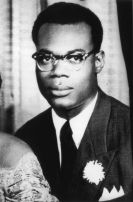
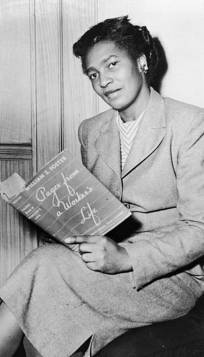
The murder of Kelso Cochrane in May 1959, had been preceded by a year of tumultuous violent attacks against blacks in the Western stretch from Kensal Rise. ‘Nigger-hunting’ tours were carried out by far-right groups like the Union Movement. These acts of aggression included attacking black people walking by themselves, fire and petrol bombing of houses. The setting on fire of a house in Notting Dale triggered a fight involving hundreds of whites against the West Indians. While his death hastened the National Labour Party, the White Defence League and the Union Movement into the spread of more propaganda. It also galvanised the West Indian community and gave birth to the Harmonist Movement. Founded by MacDonald Stanley, the Harmonist Movement was intended to bring about racial harmony between blacks and whites. Which opened in November 1958 and spread to other parts of London. It also urged the West London Caribbean committee into the need for newspaper that relates to their experience and addresses their problems. This need was met by Trinidadian journalist Claudia Jones. Who started the West Indian Gazette. Which also organised the first Carnival.
In the next chapter, Ramdin presents the core of his thesis, the discriminatory policies that blacks in Britain were to receive, need to be seen in the context of the international exploitation of labour. The labour gap caused by the advancement of white working classes into more service industries created a demand for a new working class. Their political status as migrants makes their potential for financial exploitation much greater. We often take discrimination at face-value, a product of the visceral and savage behaviour of hooligans and thugs. In our horror of teddy boy attacks and petrol bombs, we lose sight of racism as an economic function of capitalism. This is what Ramdin is able to elucidate so well, racism became the justification for exploitation of first Africans and then Indians. In the US there was the three-fifths of a human rule enshrined in the constitution. Similarly colonial law categorized all Black Africans the property of their masters governed the British ruled islands. Laws are put into operation by the capitalist class to maximize financial gain. We see an intensifying of this in the twentieth century as in the next chapter Ramdin documents the industrial labour protests of Asians. The first is at Courtalds Red Scar Mill in Preston, which started over the managements forcing of workers to function more machines for less pay. The arrangement of a deal between the management at Red Scar and the Transport and General Workers Union resulted in a 50 per cent increase in output for 3 per cent increase in wage. The workers, most of whom were Indian and Pakistani went on strike for three days. Although Michael X of RAAS (Racial Adjustment Action Society) remained outspoken. His organization was not equipped to deal with an industrial workers movement to challenge corporations. Nevertheless, it highlighted the lack of union support.
Followed by the Imperial Typewriters strike in Leicester, on May Day in 1972 more than 500 East African Asians workers walked out of the factory, aggrieved by managements overlooking of their concerns. Primarily because of bonus rates and the expectancy to do more machines with the same pay. There was also the concern of favourable treatment of white workers. It was in this strike in which the Asian women began to shatter the passive wife image that was held by so many. On the picket line, they produced a loud thrashing sound every time a member of management walked out. The Asians carried the strike forward dynamically, gathering funding from various community organizations and setting up an inquiry into the two lieutenants of capital. Tom Bradley, President of the Transport Salaried Staff Association and Reg Weaver the TGWU convenor. Both of who had attempted to dissuade the picketers. Although most of the strikers were sacked, this was an event that exposed the TGWU and the larger paradox of using the instruments of a system to defeat it. Nowhere was this struggle more apparent than at the Grunwick strike of 1976.
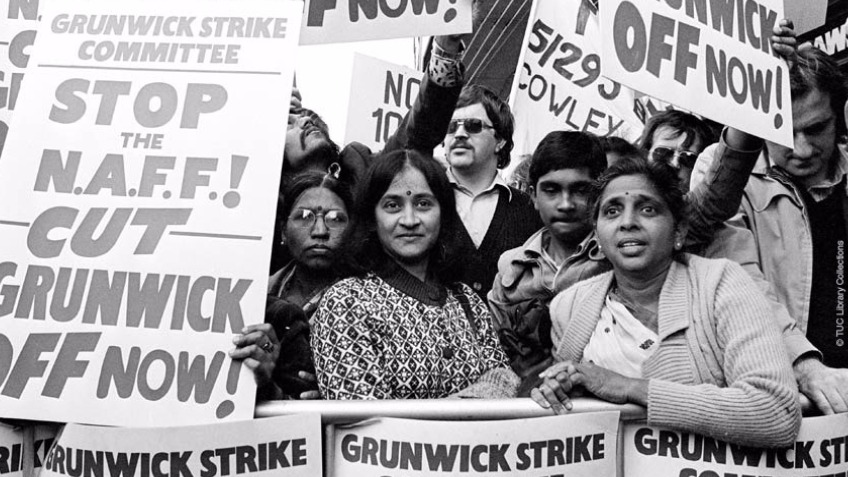
The North-West London printing firm had 429 East Asian Africans on their workforce, most of whom were women. One of them a young Devshi Bhudia, who along with three other workers decided to work slowly as a protest to; the thirteen crates that he was required to go through and compulsory overtime. This momentum was picked up by one of the workers, Jayaben Desani who became the leader and galvanizer of this fifteen-month strike which had amassed 20,000 people by July 1977. These Asian women in sari’s stood outside the company building on Chapter Road with pickets demanding better conditions. Grunwick was in many ways to become a foreteller of the frustrations that Blacks would encounter when challenging the illegal practices of institutions. The failure of APEX, the and the general TUC to bring about any effective change to working conditions. Although of good intentions, the head of the TUC Jack Dromney was detached from the daily problems of the Grunwick workers. He placed too much faith in his belief of trade unions as a force of good. As previously mentioned, the problem of using the machinery of the state to combat the state.
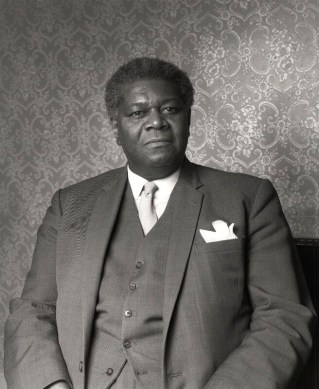
In ‘Organisers and Organizations’ Ramdin credits Stokely Carmichael with introducing ‘Black Power’ to Btitain. He spoke at the Dialectics of Liberation in London 1967 in which he interlinked the struggle of blacks in Britain to the wider battle of the third world against the capitalist class. In order for black power to be achieved all blacks would have to unite across territorial and language barriers. The old methods of fighting had to be abandoned and blacks should through the taking of power of their community control their own destiny. Carmichael also spoke at rallies in Brixton, Notting Hill and appeared on the BBC. In 1966 the dissolution of CARD (Campaign Against Racial Discrimination) was brought about by a schism between the dissidents and the majority. Led by Grenadian born House of Lords member and medical doctor David Pitt who believed in the integration of whites into the group. Whereas the dissidents maintained that the group should be under the full control of immigrants.
David Pitt
Every underclass develops its own social norms as a response to rejection from the dominant society, with black people in the seventies. This manifested through two beliefs; Rastafarianism and the Yoruba origin, the Church of the Cherubim and Seraphim. The latter which had arisen out of Jamaica in the 1930’s but had taken forty years to find its medium through reggae music. With its message of African pride and its rejection of European customs, Rastafari became an inspiration for a generation of disenchanted black youth. In the final chapter of the book Ramdin attribute the development of Black Woking Class Consciousness to the militarization of the black community between the late 1970’s and 1980’s. With the introduction of riot shields, ‘sus laws,’ Special Patrol Groups, who were deployed in parts of London with high concentrations of black people. All of this was a response to the high unemployment, which remained throughout the latter decade, the riots of Afro-Caribbean communities in Brixton and Tottenham. Must be perceived as the culmination of a class-consciousness and a rebelling against the tiers above.
The Making of the Black Working Class in Britain is an incredible read, it is heavily detailed and the writer expresses his arguments with a riveting poignancy. Ramdin unearths so much of the Afro-Caribbean struggle whilst providing his own Marxist interpretation of events. It is a book hat deserves much wider excavation by historians interested in the struggles of black and brown Britain.




 Moutimbasblogs